
Every countertop material looks good in a showroom. The question outdoors is what it looks like after five summers of sun, a few hundred hot pans, and the red wine nobody wiped up until morning. Most outdoor countertop materials answer that question with a maintenance schedule. Sintered stone answers it with the material itself. This page explains what sintered stone is, how it behaves outdoors, and how it compares to the surfaces it usually gets measured against.
What is sintered stone?
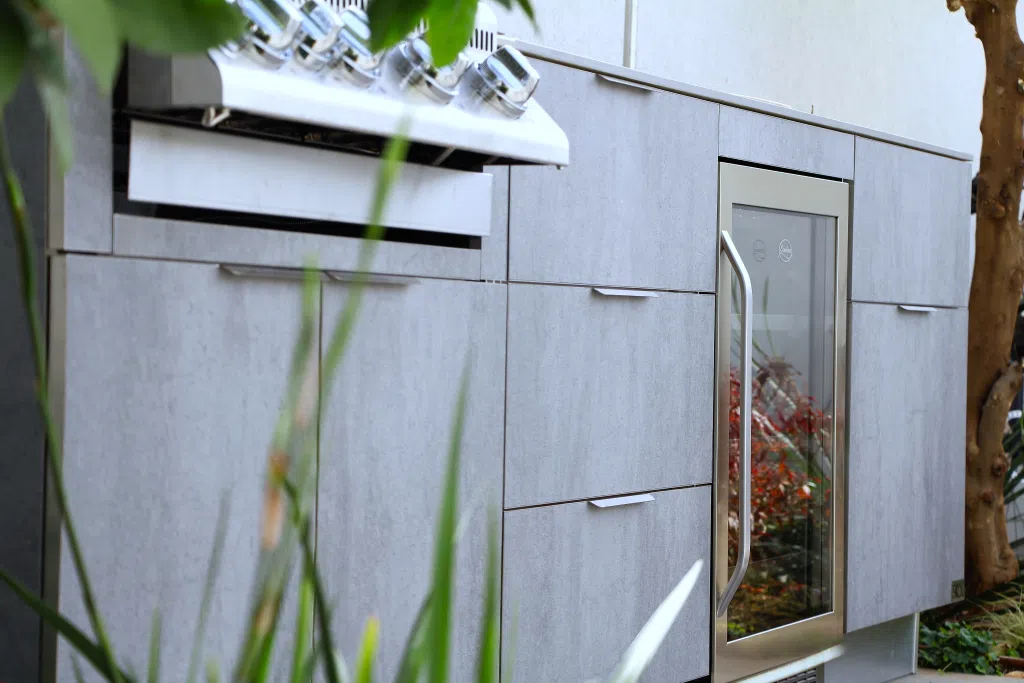
Sintered stone is an engineered surface made from natural mineral material compacted under high pressure and fired at high temperature until the particles fuse into a single dense slab. Sintering is the same principle that makes fired ceramics hard, applied to a full countertop slab. The result is a solid surface with no resin binder holding it together and effectively no open pore structure for liquid to enter.
That last property is the one that matters most outdoors. A surface that liquid cannot enter is a surface that cannot stain from the inside, and one that does not depend on a sealer someone has to remember to reapply.
Sintered stone vs granite: which is better for an outdoor kitchen?
Granite is a reasonable outdoor material and it handles heat well, which is why it has been the default for years. The difference between the two shows up in porosity and in maintenance, not in strength.
- Porosity. Most granite is porous to some degree, so oil, wine, and cooking residue can be absorbed rather than sitting on the surface. Sintered stone is non porous, so spills stay on top and wipe off.
- Sealing. Granite outdoors generally needs periodic sealing to keep that porosity closed. Sintered stone does not need sealing at any point in its life.
- UV. Darker granite slabs can lighten or shift in tone under constant sun. Sintered stone is UV resistant, so the colour you choose is the colour you keep.
- Consistency. Granite is a natural stone, so slabs vary and a repair or an extension years later may not match. Sintered stone is manufactured to a specification rather than quarried, so batch to batch variation is far smaller.
The honest summary: granite can perform well outdoors if it is sealed on schedule for the life of the kitchen. Sintered stone removes the schedule. For a surface that stays outside every day with no cover and no seasonal routine, that difference compounds.
Is sintered stone the same as porcelain?
They are close relatives and the terms are often used interchangeably in outdoor kitchen listings, which is worth knowing when you are comparing brands. Both are fired mineral surfaces and both are non porous. Porcelain slabs are typically thinner and often carry a printed decorative layer on the face. Sintered stone slabs are generally denser and thicker, with the pattern running through the body of the slab rather than sitting on the surface. In practice that matters at the edges, at cut-outs, and anywhere the surface takes a knock, because there is no thin decorative layer to wear through.
If you are comparing quotes and a manufacturer says porcelain, it is fair to ask whether the pattern is printed on the face or runs through the slab. That single question separates most of the products in this category.
Does sintered stone need to be sealed?
No. Sealing exists to close the pores of a porous material. Sintered stone has no open pore structure to close, so there is no sealer to apply, no reapplication interval, and no gradual decline in stain resistance as an old sealer wears off. Routine care is soap and water.
This is the practical difference most homeowners feel. Sealing an outdoor countertop is a job that gets done in year one, sometimes in year two, and rarely after that. A material that never needed it in the first place does not punish the lapse.
How does sintered stone handle heat, scratches, and stains?
These are three separate properties and sintered stone performs on all three for the same underlying reason: the surface is fired mineral rather than a coating or a resin bound composite.
- Heat. The slab is produced at high firing temperatures, so the heat a grill or a hot pan puts into it is well within what the material already survived in manufacture. There is no resin to scorch and no sealer to discolour.
- Scratches. The surface is scratch resistant by nature rather than by a layer applied on top. Nothing can wear through to a different material underneath, because there is no different material underneath.
- Stains. Non porous means organic matter sits on the surface. Wine, oil, citrus, coffee, and marinade wipe off rather than soak in.
- Cleaning. Routine care is soap and water. There is no material specific product to buy and no schedule to keep.
Does sintered stone fade in the sun?
No. UV resistance is one of the reasons the material suits outdoor use. Colour is not applied as a surface treatment that sunlight can break down, so a dark finish stays dark and a pale finish does not yellow. This matters more than it sounds: a countertop under a pergola and a countertop in full sun should still look like the same kitchen after several years.
What finishes does SKOL offer in sintered stone?
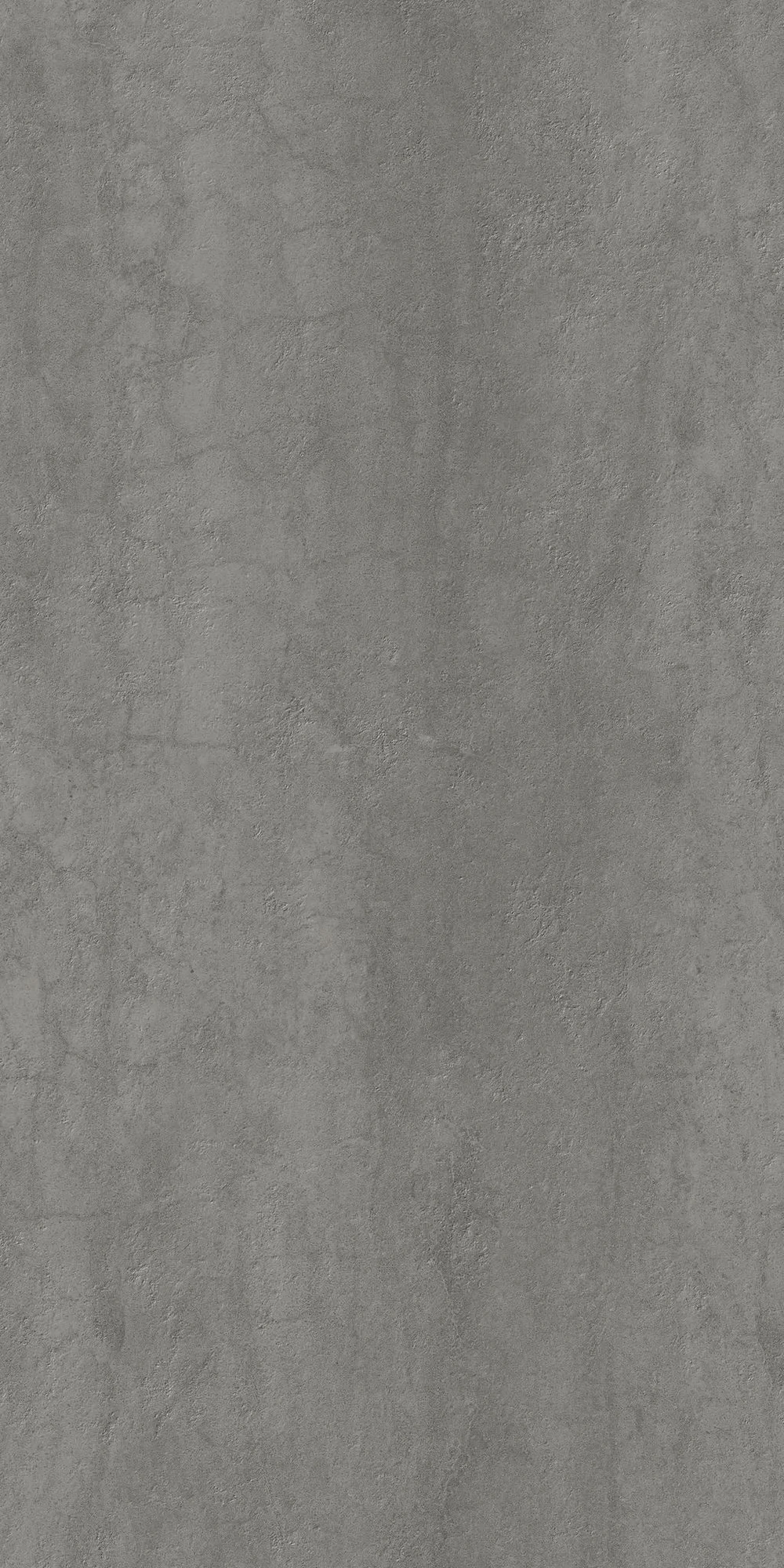
SKOL publishes sintered stone finishes including Anthracite, Grigia, Perla, and Travertino Blanco, with back panel options alongside them. Finishes can be compared side by side while you design, which is more useful than a swatch, because the finish reads differently at full countertop scale than it does on a sample.
Compare finishes on your own configuration in SKOL 360
Where does sintered stone sit in the SKOL system?
Sintered stone is the exterior. Countertops, door fronts, and side panels are all sintered stone, so the surface you touch and the surface the weather touches are the same material. Underneath it, the structure is 304 stainless steel certified to ASTM A240, which handles corrosion resistance and load. The two are chosen for different jobs: certified steel where strength and corrosion matter, sintered stone where heat, knives, and weather land.
Nothing in the assembly is painted or powder coated, so there is no coating between the weather and the material, and no scratch that reaches a different substrate underneath. The complete system carries ISO 9223 category CX certification, the most severe corrosion environment classification in that standard, and a lifetime structural warranty.
Frequently asked questions
Is sintered stone good for an outdoor kitchen?
Yes. It is non porous, so it does not absorb stains and never needs sealing, and it resists heat, scratches, and UV fading. Those are the four properties that decide how an outdoor countertop looks after several years of constant exposure, which is why SKOL uses sintered stone on every visible surface.
Sintered stone or granite for an outdoor countertop?
Both handle heat well. The difference is maintenance. Most granite is porous and generally needs periodic sealing outdoors to resist oil and wine stains, and darker slabs can shift in tone under constant UV. Sintered stone is non porous, needs no sealing at any point, and is UV resistant. Granite can perform well outdoors if it is sealed on schedule for the life of the kitchen.
Does a sintered stone countertop need to be sealed?
No. Sealing closes the pores of a porous material, and sintered stone has no open pore structure. There is no sealer to apply and no reapplication interval. Routine care is soap and water.
Is sintered stone the same as porcelain?
They are closely related, and both are non porous fired mineral surfaces. Porcelain slabs are typically thinner and often carry a printed decorative layer on the face, while sintered stone is generally denser with the pattern running through the body of the slab. That matters at edges and cut-outs, where a printed face layer can wear through.
Can you put a hot pan on sintered stone?
The material is fired at high temperature in manufacture and contains no resin binder or sealer to scorch or discolour, which is why it is specified for outdoor cooking surfaces. We do not publish a maximum temperature figure on this page. If you want a number in writing, raise it during the consultation and we will go through the material specification with you.
Related
See the finishes at full scale in your own space. Design your kitchen in SKOL 360, free, in 3D and in augmented reality, and compare sintered stone finishes as you build. Or book a conversation and order material samples through it.